

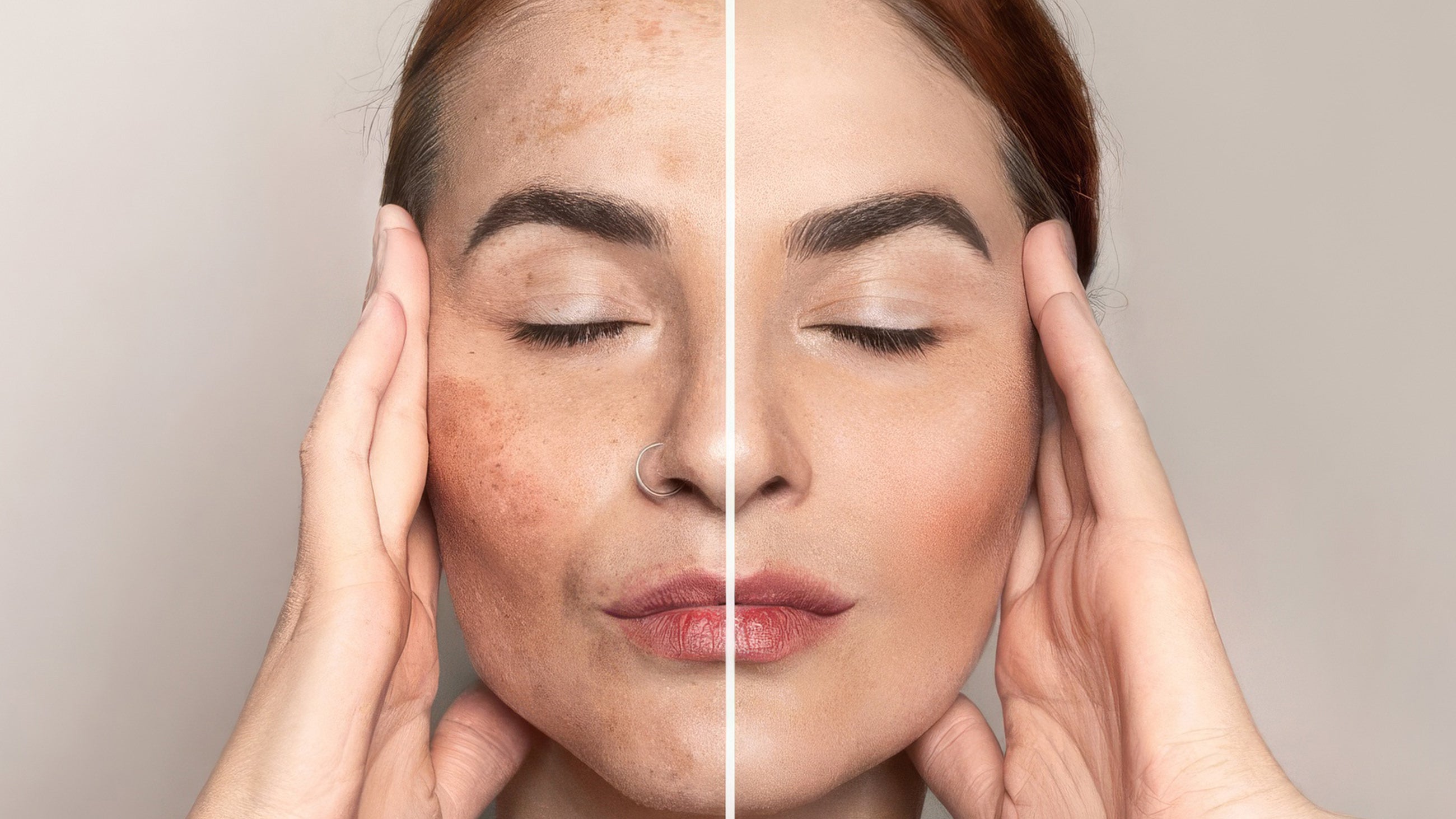
A natural hyperpigmentation treatment can help fade dark spots, but the ingredient you choose matters. Advice online ranges from evidence-supported vitamin C to putting lemon juice directly on your face.
Some recommendations have research behind them. Others can irritate your skin and make pigmentation worse.
That difference is especially important for medium to deep skin tones. Irritation can trigger post-inflammatory hyperpigmentation and leave marks that last longer than the original concern.
Here’s what we’ll cover:
- Five ingredients that may help fade hyperpigmentation
- Why different types of dark spots require different approaches
- DIY remedies that can irritate your skin
- Why sunscreen is essential for pigmentation
- When professional treatment may be worth considering
At Fix Studios, we see clients at every point in this process. Sometimes, a targeted skincare routine is enough. Other times, stubborn sun damage or brown spots may call for a professional option such as Lumecca IPL.
Why Dark Spots Form in the First Place
Not all hyperpigmentation responds the same way to the same ingredients.
The right approach depends heavily on what is causing the discoloration. Skipping this step is one reason people spend months using a routine that was never suited to their skin concern.

The Three Most Common Types of Hyperpigmentation
Melasma commonly appears as symmetrical patches on the cheeks, forehead, or upper lip. Hormones and sun exposure can contribute to melasma, and it can be stubborn to treat.
Post-inflammatory hyperpigmentation (PIH) develops after skin inflammation or injury. Acne, irritation, burns, and some procedures can leave excess pigment behind.
The American Academy of Dermatology explains that identifying and treating the cause of dark spots is an important first step. This is especially important with PIH because continued irritation can cause additional discoloration.
Solar lentigines, often called age spots or sun spots, develop after cumulative UV exposure. They tend to appear as defined, flat areas of discoloration.
All three involve excess pigmentation, but their triggers differ. That means their ideal treatment plans can differ, too.
Why Skin Tone Changes the Risk Profile
Medium to deep skin tones contain more melanin. When inflammation or irritation occurs, the skin may respond by producing additional pigment.
That means an overly aggressive active ingredient or DIY remedy can create the exact problem you're trying to treat.
“Natural” does not automatically mean gentle.
That distinction becomes especially important when considering some of the home remedies commonly promoted online.
5 Natural Ingredients That May Help Fade Hyperpigmentation
Several naturally derived or commonly used skincare ingredients have enough evidence behind them to make them worth considering.
They aren't overnight fixes. Consistent use, realistic expectations, and daily sun protection are still essential.
1. Vitamin C
Vitamin C is one of the best-known brightening ingredients.
L-ascorbic acid is commonly formulated at concentrations around 10% to 20%. Vitamin C can interfere with pathways involved in melanin production while also providing antioxidant benefits.
The American Academy of Dermatology includes vitamin C among ingredients that may help fade existing dark spots.
Visible changes take time.

You may begin noticing improvement within several weeks. More substantial changes can take several months, depending on your skin and the cause of the pigmentation.
PIH may respond differently from melasma or longstanding sun damage.
If your skin is reactive, gentler vitamin C derivatives may also be worth discussing with a skincare professional.
2. Niacinamide
Niacinamide approaches pigmentation differently.
Rather than directly targeting melanin production, it can reduce the transfer of pigment into surrounding skin cells.
Concentrations around 4% to 5% are commonly used in skincare research and formulations.
One reason we like niacinamide is its versatility. It tends to fit comfortably into many skincare routines and is generally well tolerated.
That's particularly helpful when pigmentation-prone skin needs a gentler approach.
3. Azelaic Acid
Azelaic acid is another useful option for both pigmentation and acne-prone skin.
It can affect tyrosinase activity, an enzyme involved in pigment production.
DermNet notes that azelaic acid can help reduce pigmentation, including persistent post-inflammatory marks and melasma.
Azelaic acid is available in different concentrations depending on the product and whether it is prescription strength.
It's another example of why matching the ingredient to the skin concern matters. Someone managing acne plus PIH may have different priorities from someone treating sun spots.
4. Aloe Vera
Aloe vera has some interesting early research behind it, although the evidence is more limited than it is for ingredients such as vitamin C or azelaic acid.

A compound in aloe called aloesin has been studied for its potential effect on pigmentation pathways.
That doesn't mean rubbing aloe on your skin will erase dark spots.
Think of aloe as a supporting ingredient rather than the foundation of a serious pigmentation plan.
It may complement a well-designed routine, particularly when soothing the skin is also a priority.
5. Green Tea
Green tea also has limited but promising evidence.
Its antioxidant compounds have been investigated for several skin benefits, including their potential role in pigmentation.
Like aloe, however, green tea shouldn't be positioned as a miracle treatment.
It makes more sense as a supporting ingredient alongside better-established pigmentation treatments and diligent sun protection.
“Natural” Home Remedies That Can Make Dark Spots Worse
This is where we need some real talk.
Some of the most popular DIY pigmentation treatments aren't simply ineffective. They can irritate or injure the skin.
And irritation can lead to more pigmentation.
Why Lemon Juice and Apple Cider Vinegar Are Risky
Lemon juice is frequently promoted as a natural skin brightener.
That doesn't make putting fresh lemon juice on your face a good idea.
Citrus compounds combined with sun exposure can cause a phototoxic skin reaction. Irritation and injury can then leave post-inflammatory discoloration behind.
Apple cider vinegar creates another problem.
Its acidity can irritate the skin and damage the barrier, particularly when it's applied undiluted.
Neither is necessary when safer, better-studied ingredients are available.
What About Turmeric and Baking Soda?
Turmeric appears in countless DIY skincare recipes.
It can cause irritation or contact dermatitis in some people. It can also temporarily stain the skin.
Baking soda creates a different issue because of its alkaline pH.
Your skin's protective barrier functions within a specific environment. Repeatedly disrupting it can increase dryness, sensitivity, and irritation.
If you're pigmentation-prone, unnecessary inflammation is something we want to avoid.

How to Use Natural Hyperpigmentation Treatments Safely
Choosing an ingredient is only part of the process.
How you introduce it matters almost as much.
Give Your Routine Enough Time
Hyperpigmentation is rarely a quick fix.
Early improvement may become noticeable within four to eight weeks. More meaningful changes often require several months.
Some deeper pigmentation can take considerably longer.
The American Academy of Dermatology notes that certain dark spots may take 6 to 12 months to fade once their underlying cause has been addressed.
This is where people often get frustrated.
They abandon an ingredient too soon or start stacking multiple actives, hoping that more products will produce faster results.
Sometimes that strategy creates irritation instead.
Consistency usually wins.
Introduce Actives Slowly
Start with one new active rather than changing your entire routine at once.
Watch how your skin responds.
If your skin becomes persistently red, itchy, painful, or irritated, stop using the product and seek professional guidance when needed.
Once your skin is comfortable with one ingredient, you can consider whether adding another makes sense.
More isn't automatically better.
The goal is steady improvement without creating inflammation that triggers more discoloration.
Sunscreen Is Part of Every Hyperpigmentation Treatment
You can buy an excellent brightening serum and still undermine your results by skipping sunscreen.
UV exposure stimulates pigment production.
For that reason, sun protection isn't an optional addition to a pigmentation routine. It's part of the treatment.
What SPF Should You Use?
Choose a broad-spectrum sunscreen with at least SPF 30.
For people prone to melasma or persistent dark spots, tinted sunscreen can offer another advantage.
Visible light can contribute to hyperpigmentation, particularly in darker skin tones and people with melasma. Tinted sunscreens containing iron oxides can provide protection beyond standard UV filters.
Research also supports the role of iron oxides in protecting against visible-light-induced pigmentation.

Application Matters
Apply sunscreen generously before sun exposure.
Reapply approximately every two hours when you're outdoors and after swimming or sweating.
Hats, shade, and protective clothing provide additional protection.
These habits aren't glamorous, but they're powerful.
A great pigmentation routine paired with inconsistent sunscreen use is like filling a bathtub without plugging the drain.
When Natural Hyperpigmentation Treatment Isn't Enough
There is absolutely a place for a thoughtful at-home routine.
But there's also a point when buying another brightening serum isn't necessarily the best next move.
Professional guidance may make sense when you're dealing with:
- Persistent melasma
- PIH that hasn't improved after months of consistent care
- Significant sun damage
- Widespread brown spots
- Pigmentation accompanied by texture changes
- A routine that repeatedly causes irritation
The goal isn't to throw a stronger treatment at every dark spot.
It's to identify what you're treating first.
From Medical-Grade Skincare to Lumecca IPL at Fix Studios
At Fix Studios, we approach pigmentation based on your skin type, skin tone, history, and the type of discoloration you're seeing.
A personalized skincare consultation can help determine whether medical-grade topicals or other options fit your skin.
For stubborn sun damage, brown spots, and uneven tone, Lumecca IPL treatment at Fix Studios may be another option.
Lumecca uses intense pulsed light to target pigment. It's designed to address concerns such as sun damage, age spots, redness, and uneven-looking tone.
However, IPL isn't automatically the right choice for every pigmentation concern.
Melasma deserves particular caution. DermNet notes that IPL and laser treatments can carry a risk of relapse or post-inflammatory hyperpigmentation in melasma.
That's one reason an assessment matters before choosing a device-based treatment.
If you're comparing your options, you can also review Fix Studios' transparent Lumecca IPL pricing before making a decision.
No hidden numbers. No guessing what your next step might cost.
The Bottom Line on Natural Hyperpigmentation Treatment
A natural hyperpigmentation treatment works best when it addresses the right type of pigmentation.
Vitamin C, niacinamide, and azelaic acid have useful evidence behind them. Aloe vera and green tea may provide additional support, although their evidence is more limited.
Skip harsh DIY treatments such as lemon juice, apple cider vinegar, and baking soda.
And don't underestimate sunscreen.
If you've given a consistent routine several months without meaningful improvement, getting professional guidance can be more productive than continually adding new products.
For clients in Mason and Greater Cincinnati, Fix Studios offers personalized skincare planning and advanced options for pigmentation concerns.
Book a consultation with Fix Studios to build a plan based on your skin rather than another round of online guesswork.
Frequently Asked Questions About Hyperpigmentation
| Question | Answer |
| What is the best natural hyperpigmentation treatment? | There isn't one best treatment for everyone. Vitamin C, niacinamide, and azelaic acid are among the better-supported topical ingredients. The right choice depends on whether you're dealing with PIH, melasma, sun damage, or another cause. |
| How long does hyperpigmentation take to fade naturally? | Early improvement may appear within several weeks, but meaningful fading can take months. Some dark spots may take 6–12 months or longer, particularly when pigment sits deeper in the skin. |
| Can vitamin C fade dark spots? | Vitamin C can help improve the appearance of dark spots by affecting pathways involved in melanin production. Consistent use and sun protection are important for results. |
| Does sunscreen actually help fade hyperpigmentation? | Yes. Sunscreen helps prevent UV exposure from stimulating additional pigment. Tinted sunscreen containing iron oxide can also help protect against visible light, which may contribute to melasma and hyperpigmentation. |
| When should I consider professional hyperpigmentation treatment? | Consider professional guidance when pigmentation hasn't responded to several months of consistent care, keeps returning, is difficult to identify, or involves stubborn sun damage or melasma. An assessment can help determine whether skincare, prescription options, or an appropriate procedure makes sense. |
Disclaimer
This article is for informational purposes only and should not be considered medical advice. Results vary from person to person. Always consult with a qualified provider before starting any treatment.
If you’re looking for natural hyperpigmentation treatment near me, Fix Studios offers natural hyperpigmentation treatments in Cincinnati OH and is located in Mason OH and conveniently located near Montgomery OH, Sycamore Township OH, Symmes Township OH, West Chester OH, Blue Ash OH, Loveland OH, Landen OH, Sharonville OH, Evendale OH, Fairfield OH, Hamilton OH, and other areas of Greater Cincinnati.
If you’re comparing options for natural hyperpigmentation treatments Cincinnati, Fix Studios can help you choose a safe, thoughtful plan for natural hyperpigmentation treatments Cincinnati.



Share:
5 Female Hair Loss Treatments in Cincinnati: From Minoxidil to PRP
Botox Aftercare Cincinnati: 9 Things to Do in the First 72 Hours