

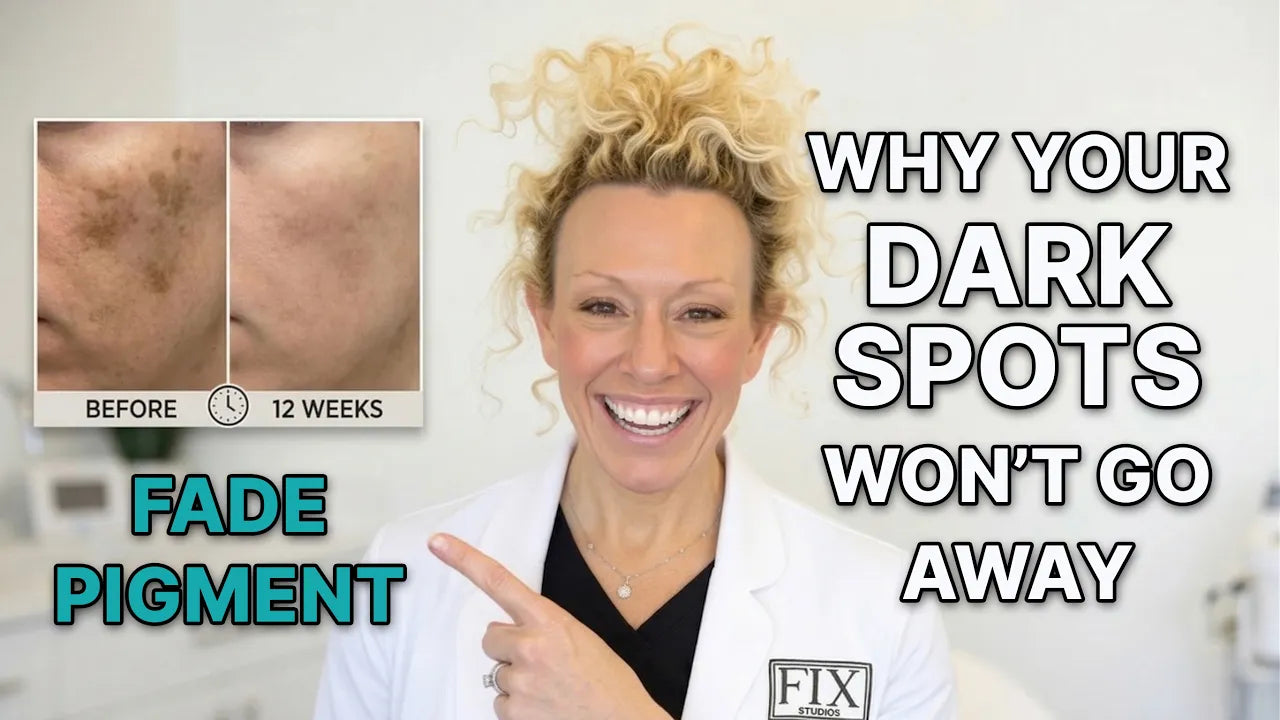
Hyperpigmentation can be frustrating, especially when you're using products for dark spots but aren't seeing progress.
Sometimes the problem isn't that you need another product. Certain skincare habits can continue triggering pigment while you're trying to fade it.
In this episode of Skin Strategy with Dr. Beth, Dr. Beth Matre explains seven common mistakes that can make hyperpigmentation, melasma, and post-acne dark marks harder to improve.
Watch the full episode:
What You'll Learn About Hyperpigmentation
✅ Why using too many skincare actives can irritate your skin and work against your pigment goals
✅ Why sunscreen matters for hyperpigmentation—even when you're spending much of your day indoors
✅ Why tinted sunscreen with iron oxides may be especially useful when visible light contributes to pigmentation
✅ How over-exfoliating can trigger irritation instead of helping dark spots fade faster
✅ The correct order for layering skincare products so your routine works as intended
✅ Why picking and squeezing blemishes can leave lingering post-inflammatory hyperpigmentation
✅ What to know before using products marketed as skin-lightening treatments
✅ Why hyperpigmentation usually requires consistency rather than expecting overnight results
Why Do Dark Spots Keep Coming Back?
Treating hyperpigmentation isn't only about fading pigment that's already visible.
You also need to think about what may be encouraging additional pigmentation.
Sun exposure, visible light, skin irritation, picking at blemishes, and overly aggressive skincare routines can all matter depending on the type of pigmentation you're dealing with.
That's also why melasma and post-inflammatory hyperpigmentation (PIH) aren't necessarily the same problem.
Melasma commonly appears as patches of pigmentation, while PIH can develop after inflammation or an injury to the skin, including acne.
Identifying what you're dealing with can help guide which skincare and treatment strategies make sense.
7 Mistakes That Can Make Hyperpigmentation Harder to Improve
1. Using Too Many Skincare Actives
More isn't always better.
Stacking multiple strong active ingredients can irritate your skin. If your skin barrier becomes irritated, an aggressive routine may work against the progress you're trying to make.
Dr. Beth's approach is simple: don't keep adding products just because you're impatient for results.
2. Forgetting About Sunscreen Indoors
Daily sunscreen is an important part of managing hyperpigmentation.
UVA can pass through window glass. Visible light can also play a role in pigmentation.
For some people concerned about melasma or hyperpigmentation, tinted sunscreen containing iron oxides may provide an additional advantage when visible light is a concern.
The takeaway isn't to be afraid of your windows. It's to make consistent photoprotection part of your pigment strategy.
3. Over-Exfoliating Your Skin
It's easy to assume that removing more dead skin will make dark spots disappear faster.
Your skin doesn't necessarily work that way.
Too much exfoliation can cause irritation. When you're already prone to hyperpigmentation, repeatedly irritating your skin may make your routine counterproductive.
4. Layering Skincare Products Incorrectly
You can own great skincare products and still have a poorly designed routine.
Product order matters.
Your routine should allow products to work as intended without unnecessarily combining ingredients that irritate your skin.
If you're unsure what goes where, Fix Studios offers a free professional skincare layering guide to help simplify your routine.
5. Picking and Squeezing Breakouts
That pimple may last several days.
The dark mark you create by repeatedly picking at it can stick around much longer.
Picking and squeezing creates additional trauma and inflammation. For people prone to post-inflammatory hyperpigmentation, that can mean another lingering mark after the breakout itself resolves.
6. Using Unsafe Skin-Lightening Products
Be careful with products promising dramatic skin lightening, especially when you're unsure what they contain.
The FDA has issued warnings concerning certain over-the-counter skin-lightening products.
Dr. Beth also discusses exogenous ochronosis, a condition associated with certain skin-lightening practices and products.
Instead of chasing aggressive promises online, talk with a qualified medical professional about appropriate options for your skin and the type of pigmentation you're treating.
7. Expecting Overnight Results
Hyperpigmentation usually doesn't disappear in a few days.
Skin changes take time.
Constantly switching products because you don't see immediate improvement can make it difficult to determine what's actually helping.
Consistency matters.
The better strategy is to reduce the factors contributing to your pigmentation, use an appropriate skincare plan, protect your skin, and give that plan enough time to work.
What's the Best Way to Fade Hyperpigmentation?
There isn't one universal "best" treatment for every dark spot.
The right approach depends on what's causing the pigmentation.
Melasma, post-acne marks, sun-related pigmentation, and irritation-related pigment may require different strategies.
That's why an effective hyperpigmentation plan starts by identifying the problem rather than simply buying another product labeled "dark spot corrector."
For patients in Mason and Greater Cincinnati, Dr. Beth and the Fix Studios team can evaluate your skin, current routine, and goals before recommending an appropriate skincare or treatment plan.
Shop medical-grade skincare at Fix Studios
Schedule a consultation with Fix Studios
Chapters
0:00 — Why your dark spots aren't fading
0:18 — Meet Dr. Beth and Fix Studios
0:40 — The real game plan: Stop triggers + fade hyperpigmentation
1:17 — Mistake #1: Too many skincare actives
2:36 — Mistake #2: Sunscreen indoors + tinted iron oxides
5:25 — Mistake #3: Over-exfoliating
6:24 — Mistake #4: Incorrect skincare product layering
7:40 — Mistake #5: Picking + squeezing = dark marks
8:38 — Mistake #6: Unsafe lightening creams
9:26 — Mistake #7: Expecting overnight results and quitting too soon
10:16 — Recap + what to do next
About Dr. Beth
Dr. Beth Matre is a Doctor of Nursing Practice and Certified Nurse Practitioner with more than a decade of experience in aesthetics and wellness.
Her clinical experience also includes more than two decades across Critical Care, ER/Trauma, Dermatology, and Urgent Care.
At Fix Studios in Mason, Ohio, Dr. Beth combines medical expertise with straightforward education to help patients make informed decisions about their skin.
Fix Studios serves Mason and the Greater Cincinnati area with personalized aesthetic treatments, medical-grade skincare, transparent pricing, and an emphasis on refined, natural-looking results.
This video and article are for educational purposes only and aren't personal medical advice. For a plan tailored to your skin, talk with a qualified medical professional.



Share:
Medspa Price Pressure? Here's What's Really Happening
Botox Alternative That Gives Better Results? Here's What Works