

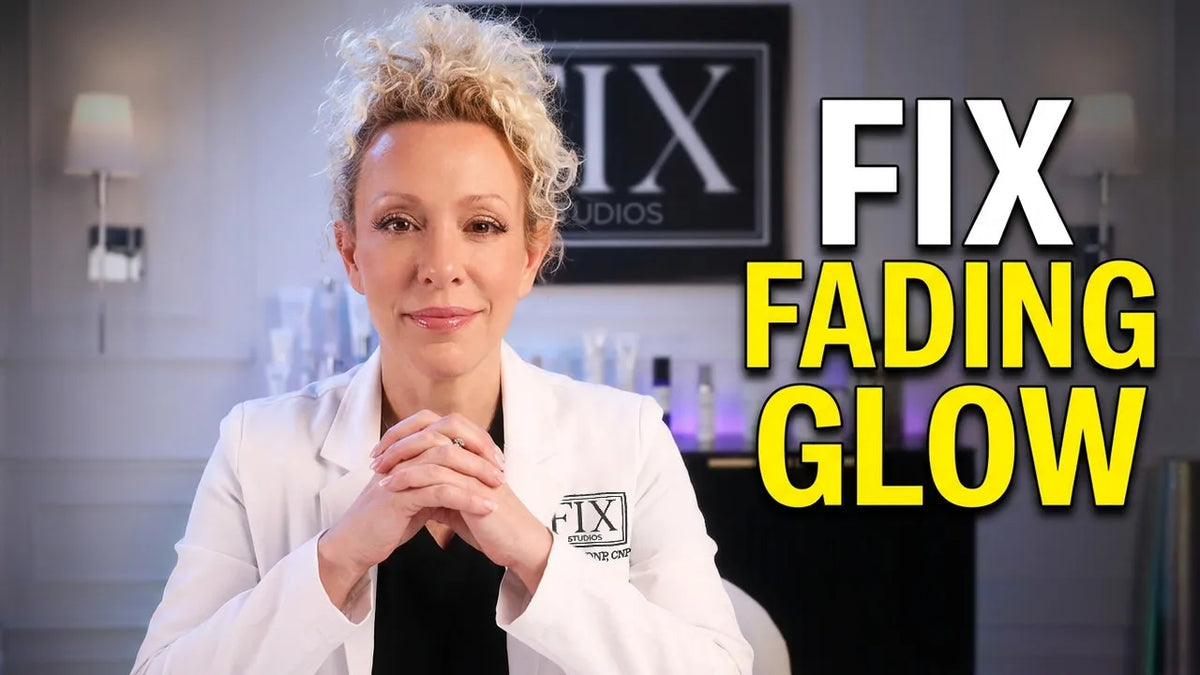
Skin after 35 can start looking duller, drier, thinner, or less even... even when you haven't changed your skincare routine.
That's because visible skin changes after 35 often have more to do with biology than with having "bad skin."
Hormonal shifts, slower cell turnover, collagen changes, UV exposure, and environmental stress can all affect radiance.
In this episode of Skin Strategy with Dr. Beth, Dr. Beth Matre explains the three biggest reasons skin can lose glow after 35 and shares a simple framework to help: protect, rebuild, and boost.
Watch the full episode:
What You'll Learn About Skin After 35
✅ Why hormonal changes can make skin feel drier, thinner, and less radiant
✅ How slower cell turnover can affect brightness, texture, and the way skincare products perform
✅ Why collagen changes become more noticeable with age
✅ How sun exposure, pollution, and lifestyle stressors contribute to dull-looking skin
✅ Why sunscreen and antioxidants are the first line of defense
✅ How retinoids, hydration, and appropriate exfoliation can help support brighter-looking skin
✅ Which professional treatments may help improve pigment, redness, texture, and firmness
✅ How Dr. Beth's three-step protect, rebuild, and boost framework simplifies skincare after 35
Why Does Skin Get Duller After 35?
There usually isn't one single reason.
Skin after 35 can change because several biological and environmental factors start overlapping.
Three of the biggest are:
- Hormonal shifts
- Slower cell turnover and collagen decline
- Cumulative environmental exposure
Together, those changes can make skin look less reflective, less even, and less hydrated than it did before.
That doesn't mean healthy glow is gone for good.
It means your skincare routine may need to change along with your skin.
1. Hormonal Changes Can Affect Skin After 35
Hormones influence many aspects of skin function.
As hormone patterns begin changing in the years around perimenopause and menopause, some people notice differences in:
- Hydration
- Skin thickness
- Elasticity
- Oil production
- Sensitivity
- Overall radiance
Skin may suddenly feel drier even if your old moisturizer used to work well.
Makeup may sit differently.
Fine lines can appear more noticeable when the skin is dehydrated.
And products that once felt comfortable may start causing irritation.
That's one reason skincare after 35 shouldn't simply be your skincare routine from your twenties with more products added to it.
The skin itself may be changing.
Why Can Perimenopause Make Skin Look Dull?
Hormonal shifts can influence hydration, collagen, and the skin barrier.
When skin holds less moisture, its surface can look less smooth and reflective.
That can translate visually into skin that appears:
- Dull
- Dry
- Crepey
- Rough
- Less plump
This is why improving radiance isn't always about stronger exfoliation.
Sometimes dull skin needs better hydration and barrier support instead.
2. Cell Turnover Slows and Collagen Changes
Skin renewal isn't static throughout life.
As we age, the processes involved in skin renewal and collagen support change.
That can contribute to:
- Rougher texture
- Uneven tone
- Less brightness
- More visible fine lines
- Reduced firmness
When older surface cells remain longer, skin may reflect light less evenly.
That can make the complexion look flat or tired even when you're otherwise healthy.
This is one reason retinoids and appropriate exfoliation are often discussed in anti-aging skincare.
The goal isn't to "scrub away aging."
It's to support healthy skin renewal without creating unnecessary irritation.
Does Slower Cell Turnover Affect Skincare Products?
It can affect the way skin looks and feels, which can change how products seem to perform.
When skin is dry, rough, or irritated, simply adding stronger products isn't always the answer.
A better routine may focus on several things at once:
- Supporting hydration
- Improving barrier function
- Encouraging appropriate skin renewal
- Protecting against further UV damage
That creates a more useful foundation for the products you're already using.
3. Sun Damage and Environmental Stress Add Up
A large part of visible skin aging is influenced by cumulative environmental exposure.
Sun exposure is one of the biggest factors.
Over time, UV exposure can contribute to:
- Uneven pigmentation
- Fine lines
- Loss of firmness
- Changes in texture
- Reduced radiance
Pollution and lifestyle stressors may add to oxidative stress as well.
That's why Dr. Beth's plan starts with protection, not with the most aggressive anti-aging treatment.
Step 1: Protect Your Skin With Sunscreen and Antioxidants
If your goal is healthier-looking skin after 35, prevention matters just as much as correction.
Daily Sunscreen
Daily SPF helps protect skin from additional UV-related damage.
That matters whether you're trying to improve:
- Dark spots
- Fine lines
- Uneven tone
- Texture
- Overall dullness
You can invest in great skincare and professional treatments, but continued UV exposure can work against that progress.
Antioxidants
Antioxidants, including vitamin C, are commonly used to support skin against oxidative stress.
They can fit well into a morning skincare routine alongside sunscreen.
The idea is straightforward:
Protect your skin during the day while supporting repair and renewal over time.
Step 2: Rebuild Glow With Retinoids and Hydration
Once protection is in place, the next layer is rebuilding the quality of the skin itself.
Retinoids
Retinoids are among the most established ingredients in anti-aging skincare.
They can support skin renewal and help improve concerns such as:
- Fine lines
- Uneven texture
- Dullness
- Uneven tone
But stronger isn't always better.
The right retinoid and frequency depend on your skin's tolerance.
A routine that leaves you constantly red, peeling, or irritated isn't automatically more effective.
Hydration
Hydration becomes increasingly important when skin starts feeling drier.
A good moisturizer can help support the skin barrier and reduce the rough, tight appearance that often makes dullness more noticeable.
Hydrated skin tends to reflect light more evenly.
That alone can make skin appear smoother and more radiant.
Exfoliation
Exfoliation can help when used appropriately.
But over-exfoliating can disrupt the skin barrier and create irritation.
The goal after 35 isn't to exfoliate as aggressively as possible.
It's to use enough to support smoother skin without creating a new problem.
Step 3: Boost Results With Professional Treatments
Skincare can do a lot.
But there are limits to what topical products can change.
Professional treatments may be useful when you're trying to address concerns such as:
- Persistent pigmentation
- Redness
- Uneven texture
- Fine lines
- Collagen loss
- Skin laxity
- Overall tone
The best treatment depends on the concern.
Someone primarily bothered by pigment may need a different approach from someone whose main concern is texture or laxity.
That's why professional treatment planning should start with what you're actually seeing in the skin.
Which Professional Treatments Can Help Dull Skin?
There isn't one universal treatment for dull skin because dullness can come from several causes.
Depending on the concern, professional options may focus on:
Pigment
Treatments targeting unwanted pigment may be useful when uneven tone is contributing to dullness.
Redness
If redness is making the complexion look uneven, vascular or light-based treatment options may be considered.
Texture
Microneedling and other collagen-stimulating procedures may be discussed when roughness, fine lines, or acne scarring are part of the concern.
Firmness
RF microneedling and other professional treatments may be considered when collagen loss and laxity are becoming more noticeable.
A qualified provider should match the treatment to the underlying concern rather than treating "dull skin" as one diagnosis.
What Is the Best Skincare Routine After 35?
A good skincare routine after 35 doesn't need to be complicated.
Dr. Beth's framework can be summarized in three steps:
Protect
Use daily sunscreen and appropriate antioxidant support.
Rebuild
Support healthy skin renewal with products such as retinoids while maintaining hydration and barrier health.
Boost
Add professional treatments when skincare alone isn't enough to address pigment, redness, texture, or firmness.
That structure is often more useful than chasing a long list of trending products.
Can You Get Glowing Skin Back After 35?
Yes, but the goal shouldn't be to make your skin behave exactly like it did at 25.
The better goal is to understand what has changed and support the skin you have now.
That may mean:
- More consistent sun protection
- Better hydration
- Smarter use of retinoids
- Less aggressive exfoliation
- Targeted antioxidants
- Professional treatments when appropriate
Healthy-looking radiance after 35 usually comes from consistency rather than one dramatic product or procedure.
Skin After 35 in Mason and Cincinnati
At Fix Studios in Mason, Ohio, Dr. Beth Matre helps patients understand why their skin may be changing and which skincare or professional treatments fit their concerns.
For patients in Mason and Greater Cincinnati experiencing dullness, dryness, uneven tone, pigmentation, texture changes, or loss of firmness, the first step is identifying what's contributing to the change.
The goal isn't to make you look different.
It's to help your skin look healthier, more refreshed, and more like itself.
Browse medical-grade skincare at Fix Studios
Schedule a consultation with Dr. Beth and Fix Studios
Chapters
0:00 — Why your skin loses glow after 35
0:52 — Dr. Beth explains what changes after 35
1:42 — Hormonal shifts and dull, dehydrated skin
5:08 — Slower cell turnover and collagen decline
7:30 — Sun damage, pollution, and lifestyle stressors
10:13 — Step 1: Protect skin with sunscreen and antioxidants
12:54 — Step 2: Rebuild glow with retinoids and hydration
16:21 — Step 3: Professional treatments for texture and tone
18:27 — The 3-step plan to get radiance back
19:15 — Comment, subscribe, and watch next
About Dr. Beth
Dr. Beth Matre is a Doctor of Nursing Practice and Certified Nurse Practitioner with more than a decade of experience in aesthetics and wellness.
Her clinical background also includes more than two decades of experience spanning Critical Care, ER/Trauma, Dermatology, and Urgent Care.
At Fix Studios in Mason, Ohio, Dr. Beth combines medical expertise with straightforward skincare education and personalized aesthetic treatment planning.
Fix Studios serves Mason and Greater Cincinnati with medical-grade skincare, professional aesthetic treatments, transparent guidance, and an emphasis on refined, natural-looking results.
This video and article are educational and aren't personal medical advice. Your skin, health history, and treatment needs are individual, so talk with a qualified medical provider for personalized recommendations.



Share:
Thinning Hair? Here's the Combo That Actually Works